
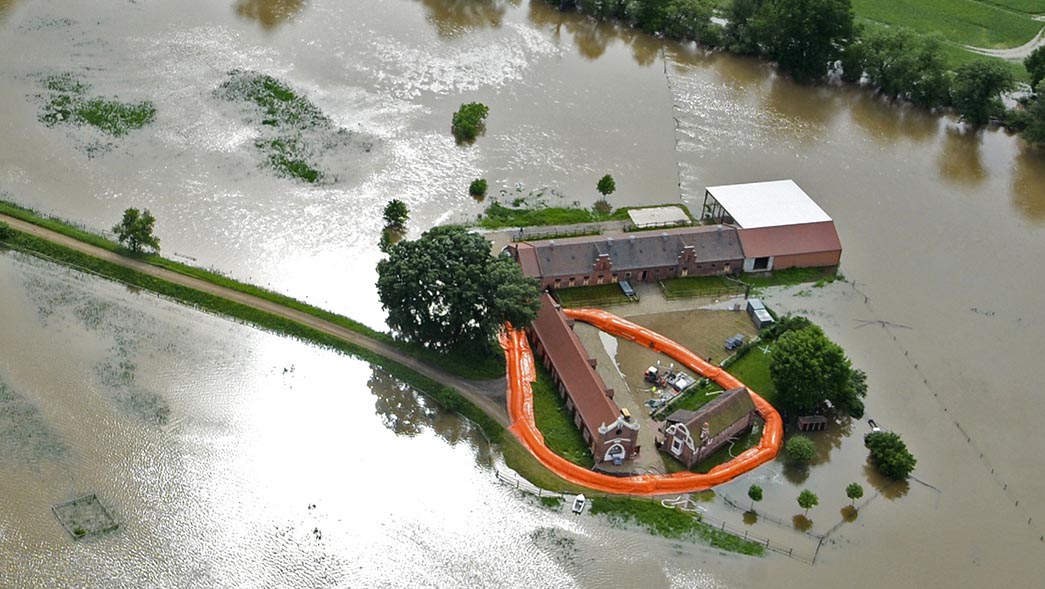
Photo by Structure-flex
Homeowners are more likely to take protective measures after experiencing flood damage, especially when supported by insurance. However, when the damage is extremely severe, this willingness tends to decline. These findings come from a study on the 2021 floods in Western Europe, conducted by climate researchers at the Climate Finance Academy (CFA) of Vrije Universiteit Amsterdam, and published in Communications Earth & Environment.
Cross-border learning
In July 2021, Germany, Belgium, and the Netherlands were severely affected by flooding. “Disasters that cross national borders highlight the importance of sharing knowledge,” says lead researcher Thijs Endendijk. “We compared experiences from the Netherlands with those from Germany and Belgium to better understand how homeowners recover and prepare for future events.”
Protective measures, such as using water-resistant materials, installing flood barriers, or elevating electrical systems, can significantly reduce damage. In the Netherlands, such actions lowered damage by 30 to 40%. Each country takes a different approach: German homeowners often focus on foundations and preventing water entry, while the Dutch tend to emphasize minimizing internal damage, by relocating boilers and power outlets to higher floors.
Insurance makes a difference
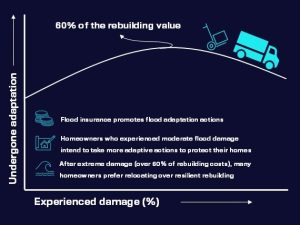
Despite these national differences, clear similarities also emerge. Adequate insurance not only enables faster recovery but also encourages homeowners to invest in further protection. “Good coverage supports both financial recovery and risk reduction,” says Wouter Botzen, professor of economics of climate change and natural disasters at the Institute for Environmental Studies (IVM). In every country, some households were already well prepared. Their experiences can serve as inspiration for others. Interestingly, it is mainly homeowners with limited damage who go on to implement additional protective measures. Those facing extreme losses (over 60% of their home’s rebuilding value) are more likely to consider relocating. For them, further investment often no longer feels worthwhile.
Targeted support is needed
As the climate continues to change, both floods and droughts are becoming more frequent and severe. “These disasters don’t stop at borders, which is why international knowledge exchange is essential. Through the JCAR-ATRACE project, we’re working more closely with German and Belgian colleagues,” Endendijk explains. The research highlights that policy should not only encourage protective measures but also provide clear information on compensation and recovery. This helps households prepare more effectively and strengthens community resilience—a hopeful step forward in tackling flood risks.
Want to learn more? Find the preprint here or contact Thijs Endendijk t.endendijk@vu.nl


