
*Missing photo source*
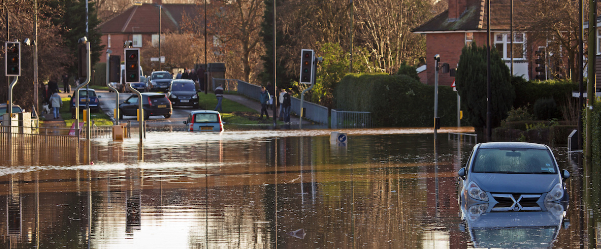
Extreme rainfall becomes more frequent and intense, leading to rising losses and damage. Climate adaptive measures decrease heavy rain damage significantly. This is a finding of a new study that climate researchers at the Climate Finance Academy (CFA) of the Vrije Universiteit published in Natural Hazards and Earth System Sciences.
Comparison of two neighbourhoods in Amsterdam
Vylon Ooms, policy advisor at the Dutch Association of Insurers and a PhD candidate at the Institute for Environmental Studies (IVM) at Vrije Universiteit Amsterdam, led new research that examined the impact of climate adaptive measures on insured damage caused by heavy rain. In his work, he and his colleagues compared two very similar neighbourhoods in Amsterdam – one that had undergone a series of climate-adaptive improvements and another that had not through a difference-in-difference method.
The neighbourhood where adaptation took place had implemented changes such as increased green spaces, enhanced water retention areas, and upgraded drainage systems. By analysing anonymised insurance claims data of 95% of insurers operating in the Netherlands, the study found that insured damage from heavy rainfall was significantly lower in the adapted neighbourhood than in its counterpart without these interventions. These results provide evidence that adaptation measures can substantially reduce the financial impact of extreme weather events.
Role of governments and insurers
Ooms explains that this research reflects broader patterns that insurers are seeing across the country: as climate extremes grow more severe, the risk of damage rises sharply, and the insurance sector is responding by prioritising ways to prevent or mitigate that damage rather than just compensate for it afterwards. According to Ooms, insurers are uniquely positioned to support policyholders in adopting climate-adapted practices. Beyond advising on risk awareness, they can offer early warnings for extreme weather and guidance on what individuals and businesses can do to protect their properties. This approach builds on earlier findings which show that early warnings and information significantly increase the likelihood that companies take protective action.
However, adaptation isn’t only about individual buildings or properties. Ooms emphasises that municipal action in public spaces is perhaps even more important. Local governments can drive large-scale adaptation by greening streets, adding water retention features, and investing in infrastructure that slows and absorbs rainwater. These structural changes create resilience at a neighbourhood-wide level and support communities where private adaptations may be harder to implement. This study can support policymakers, urban planners, investors, and insurers in embedding adaptation into their decisions from the outset. In doing so, communities can become safer and more resilient as climate risks continue to evolve.
Want to learn more? Find the research article here or contact Vylon Ooms (v.ooms@vu.nl)


