

Photo: Advantus Media Inc. and QuoteInspector.com | Bronvermelding: QuoteInspector.com; Auteursrecht: © 2018 Advantus Media, Inc. and QuoteInspector.com
The effects of climate change-related extreme weather events and fossil fuel prices can considerably spark inflation rates. That is the conclusion of a study conducted by researchers from the Climate Finance Academy, in collaboration with the Environmental Policy Assessment department at Vrije Universiteit Amsterdam. The study, commissioned by the WWF, is the first to comprehensively and quantitatively explore this relation, resulting in important insights on financial stability for policymakers and central banks.
Fossilflation remains important
Results indicate that fossil fuel price shocks had a short-term inflationary impact in Belgium, but their correlation and magnitude vary by fuel type and over time. Coal continues to affect inflation even indirectly, despite its declining role in the domestic energy mix. However, in particular circumstances-and for both fossil fuel prices and climate events-the demand side effects(i.e., reduced consumption) can outweigh supply side effects (i.e., reduced production), resulting in decreased inflation in Belgium.
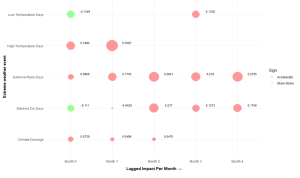
Climateflation persists for up to 4 months
Extreme high temperature days and extreme rainy days accelerate total inflation in Belgium up to 4 months after the event. The impact of extreme low temperature days and extreme dry days is not straightforward and requires further investigation. In addition, the study demonstrates that higher climate damage has a persistent impact on inflation (measured as the total insured climate damage caused by storms and floods to homes, businesses, companies, and vehicles over the last ten years).
Clear policy priorities
This study is of importance to policymakers and central bankers in general, as the results unravel the vulnerability of a small-open economy, such as Belgium, to climate change and fossil fuel prices. In response, a variety of policy tools can be implemented to combat both fossil- and climateflation. Such tools include climate adaptation measures to address and avoid climate change-related extreme weather events, but also targeted fiscal measures to alleviate upward inflationary pressures.
Want to learn more? The results of this study are discussed during a plenary session at the National Bank of Belgium on October 14, and the full report can be consulted here or contact Jan Brusselaers jan.brusselaers@vu.nl


